Larger buildings bring shared air handlers, lease terms and several responsible parties. A local company can confine the work to the affected zone while the rest of the property keeps running. Call the number on this page to be connected with a local mold company in Dayton.
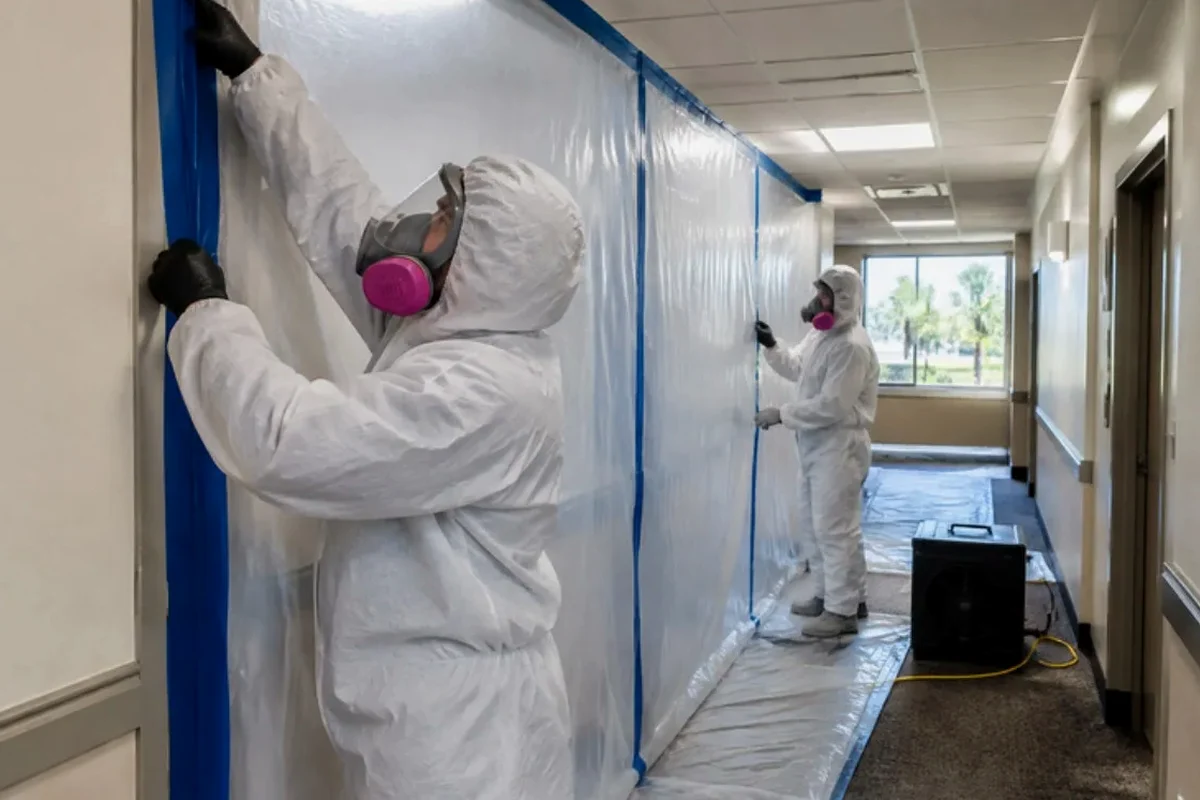
Common areas versus single units
Hallways, mail rooms, boiler closets and shared laundries all hold moisture at times. Managers and boards usually ask first whether the problem sits in a common area or inside one unit, since that decides who arranges the work, who pays and who must be told.
Where the water gets in
Flat and low-slope roofs, clogged drains and tired flashings let water in during thunderstorms and snowmelt, and a small failure can wet insulation and ceiling tile for weeks before a stain forms. Curbs around rooftop equipment are frequent weak points.
Buildings in Dayton built in the 2000s rely on drainage details and mechanical systems that need upkeep, and a missed maintenance step can show up as damp insulation or stained tile.
If your Dayton building sits close to the river, a creek or a wash, ask whether the company has handled flood-related moisture and how it checks wall bases and slabs.
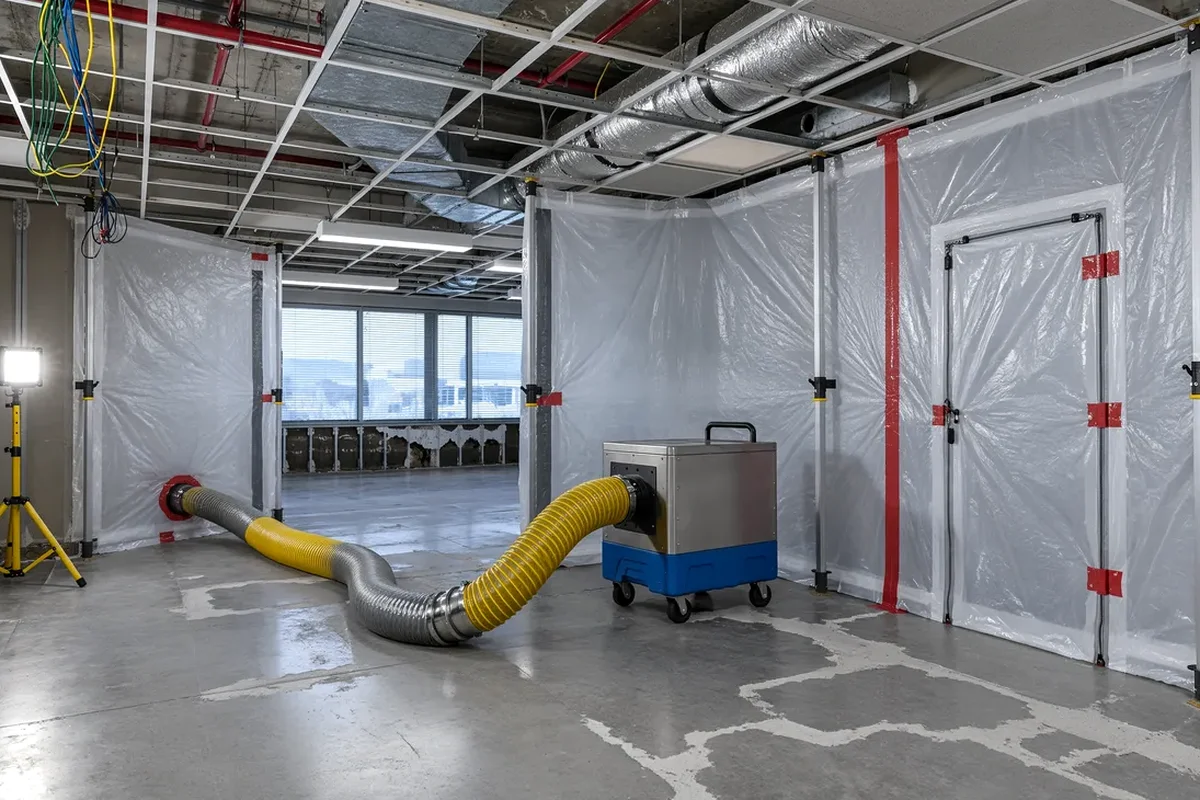
Work hours and access
Night and weekend shifts, restricted loading areas and the need to protect customers can raise labor time. A vacant warehouse bay is simpler than a working dining room. Tell each company about your open hours so the scope reflects how the building runs.
Local details for Dayton
Nevada's contractor board exempts only small repair or maintenance jobs under $1,000 in labor and materials, and even that exemption has conditions, such as whether the work needs a building permit. Mold jobs that involve tear-out often go past that line.
Keep the inspection report, the scope of work and any clearance results together; buyers, landlords and insurers often ask for them later.
Rebuild work after the mold comes out, such as new drywall or framing, may need a permit; the Lyon County building department is where to ask for Dayton addresses.
Water that came in from outside raises insurance questions; FEMA's flood map search shows whether the property sits in a mapped flood zone.
Nearby, the same kind of help is available in Carson City, Silver City and Virginia City.
What a final check should include
A closing step usually combines a visual review, moisture readings and sometimes air or surface sampling, done by a party other than the remediator when possible. It tells you the area is dry and clean enough to reopen to normal use.
Respond to every leak, however small
Log each leak, dry the area quickly and replace wet ceiling tile or insulation instead of letting it dry in place. A simple incident record also helps later if an insurer, buyer or landlord asks what happened and what was done.
Dayton at a glance
Calls come in from across Dayton, including around Dayton Valley, Santa Maria Ranch, Riverpark.
The Carson River runs through Dayton, so homes near the river corridor are worth checking for drainage and moisture.
Commercial Mold Remediation questions in Dayton
Do I need an assessor and a separate remediation company?
How long does a commercial mold job take?
What should I tell tenants or staff?
Can we just replace the stained ceiling tiles?
More mold services in Dayton
Commercial Mold Remediation nearby
Helpful guides
Sources
- Lyon County Community Development, Building Department
- Nevada State Contractors Board: handyman exemptions and license search
- Nevada State Contractors Board: Residential Recovery Fund
- EPA: A Brief Guide to Mold, Moisture and Your Home
- Nevada Real Estate Division: Seller's Real Property Disclosure form
- Dayton housing by year built
- Dayton: local background
Last updated: